Operational Performance & KPI Alignment
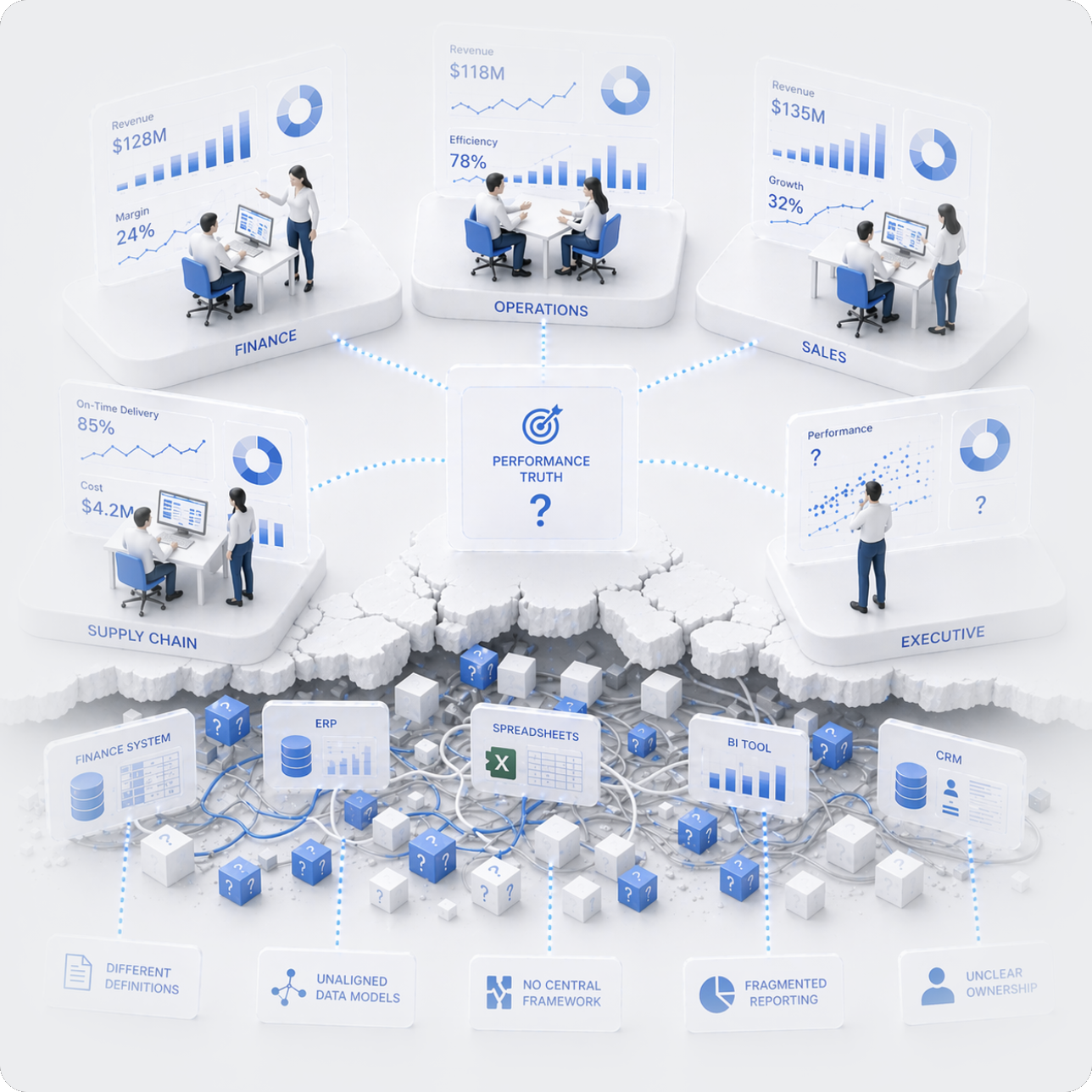
Most organizations operate with multiple versions of performance—different teams tracking different metrics, using inconsistent definitions, and making decisions based on fragmented data.
Without alignment across finance, operations, and leadership, performance becomes difficult to measure, manage, and improve.
From fragmented metrics → to aligned, decision-ready performance management
Why Performance Breaks Down
-
 Different teams use different definitions for the same metrics
 -
 Different teams use different definitions for the same metrics
 -
 Decision-making is delayed due to lack of trust in data
 -
 Finance and operations are not aligned on performance drivers
 -
 Leaders lack a single source of truth for critical KPIs
Teams are making decisions—but not always from the same reality.

What's Being Missed
When performance metrics are not aligned, organizations lose more than clarity—they lose speed, confidence, and impact.
Decisions take longer because data must be validated. Opportunities are missed because signals are unclear or inconsistent. Teams focus on optimizing local metrics instead of driving overall business performance.
Without a unified performance framework, organizations struggle to connect operational activity to financial outcomes and strategic objectives.
The cost is not just misalignment—it is slower decisions, missed opportunities, and reduced business impact.
What's Breaking Beneath the Surface
-
 KPI definitions are inconsistent across teams and systems
 -
 Data models are not aligned between finance and operations
 -
 No centralized framework for performance measurement
 - Reporting systems are fragmented across tools and departments
- Ownership of metrics and decision-making is unclear
How BlueYeti Aligns Performance and Decision-Making

Define standardized KPI framework across finance and operations
Align data models to ensure consistent metric definitions

Establish a single source of truth for performance reporting

Enable real-time visibility into operational and financial performance

Connect KPIs directly to business outcomes and decision workflows
From Fragmented Metrics to Aligned Performance

Basecamp
Diagnose + Prioritize
Audit existing metrics and identify alignment gaps across teams
Data & Systems
- KPI Inventory AuditCatalog all existing KPIs across finance, operations, and leadership
- System & Data AssessmentAudit ERP, BI tools, and operational systems for consistency
- Reporting Workflow MappingMap current reporting processes and decision-making flows
Performance & KPIs
- Definition Inconsistency ReviewIdentify gaps in definitions, calculations, and reporting logic
- Ops-to-Finance Gap AnalysisAssess disconnect between operational metrics and outcomes
- Priority Metric FrameworkEstablish baseline performance framework and priority KPIs
Governance & Alignment
- Data Trust AssessmentEvaluate confidence levels in data across teams and leadership
- Ownership Clarity ReviewIdentify gaps in metric ownership and accountability

Expedition
Design + Implement
Build a unified performance framework with standardized KPIs
Data & Systems
- Unified Data ModelAlign operational and financial metrics in one data platform
- Standardized KPI DefinitionsEnsure consistent calculations and hierarchies across teams
- Advanced Analytics IntegrationAdd AI-driven insights for performance pattern detection
Performance & KPIs
- Centralized Performance FrameworkEstablish single framework for performance measurement
- Real-Time DashboardsEnable live reporting aligned with decision-making processes
- Revenue-Cost-Margin LinkageConnect KPIs directly to financial outcomes
Governance & Alignment
- KPI Ownership ModelImplement governance for metric ownership and management
- Decision Workflow AlignmentAlign reporting workflows with decision-making cadence

Summit
Optimize + Scale
Embed aligned performance management into daily operations
Data & Systems
- Framework EvolutionContinuously refine KPI framework based on business needs
- Enterprise ScalingExtend aligned frameworks across business units and regions
Performance & KPIs
- Self-Service AnalyticsEnable teams with self-serve performance analysis tools
- Strategic KPI ExtensionExpand alignment to new use cases and initiatives
- Embedded Decision IntelligenceIntegrate KPI alignment into daily and strategic workflows
Governance & Alignment
- Metric GovernanceInstitutionalize ownership, accountability, and review cadence
- Internal Capability BuildingTrain teams to maintain and evolve performance systems
From KPI Alignment to Measurable Value Realization
Disconnected metrics, inconsistent definitions, and limited visibility into performance drivers often result in misaligned priorities and slower execution. A unified performance framework enables organizations to align KPIs across teams, improve visibility into outcomes, and drive faster, more consistent operational decision-making.

KPI Alignment
+30–50% improvement
Standardized metrics and definitions align teams around consistent performance targets

Performance Visibility
Near real-time insight
Unified dashboards provide clear visibility into operational drivers and outcomes

Decision Cycle Speed
25–40% faster
Faster access to trusted data accelerates decision-making and execution cadence
Economic Impact
What This Means Financially
For a $250M–$500M company, these improvements typically translate into:
- $3M–$10M in improved operational efficiency and execution alignment
- $2M–$8M in reduced inefficiencies from misaligned priorities and delayed decisions
- Faster execution cycles by 25–40% across operational teams
Impact ranges are based on aggregated industry benchmarks and observed outcomes across operational performance and KPI alignment initiatives. Actual results vary based on organizational complexity, data maturity, and execution rigor.