Operational Efficiency & Throughput Optimization
Most operations are not constrained by demand—they are constrained by flow. Bottlenecks, downtime, and disconnected systems limit throughput, reduce capacity utilization, and drive up operational costs.
Without real-time visibility into constraints, teams optimize locally instead of improving overall system performance.
From fragmented processes → to optimized flow and maximum throughput
Why Operations Break Down
-
 Bottlenecks limit throughput across production and fulfillment processes
 -
 Downtime and inefficiencies are identified too late to act
 -
 Teams optimize individual functions instead of the full system
 -
 Capacity remains underutilized despite rising operational costs
 -
 Leaders lack visibility into constraints driving performance
Teams are working harder—but not always improving system output.

What's Being Missed
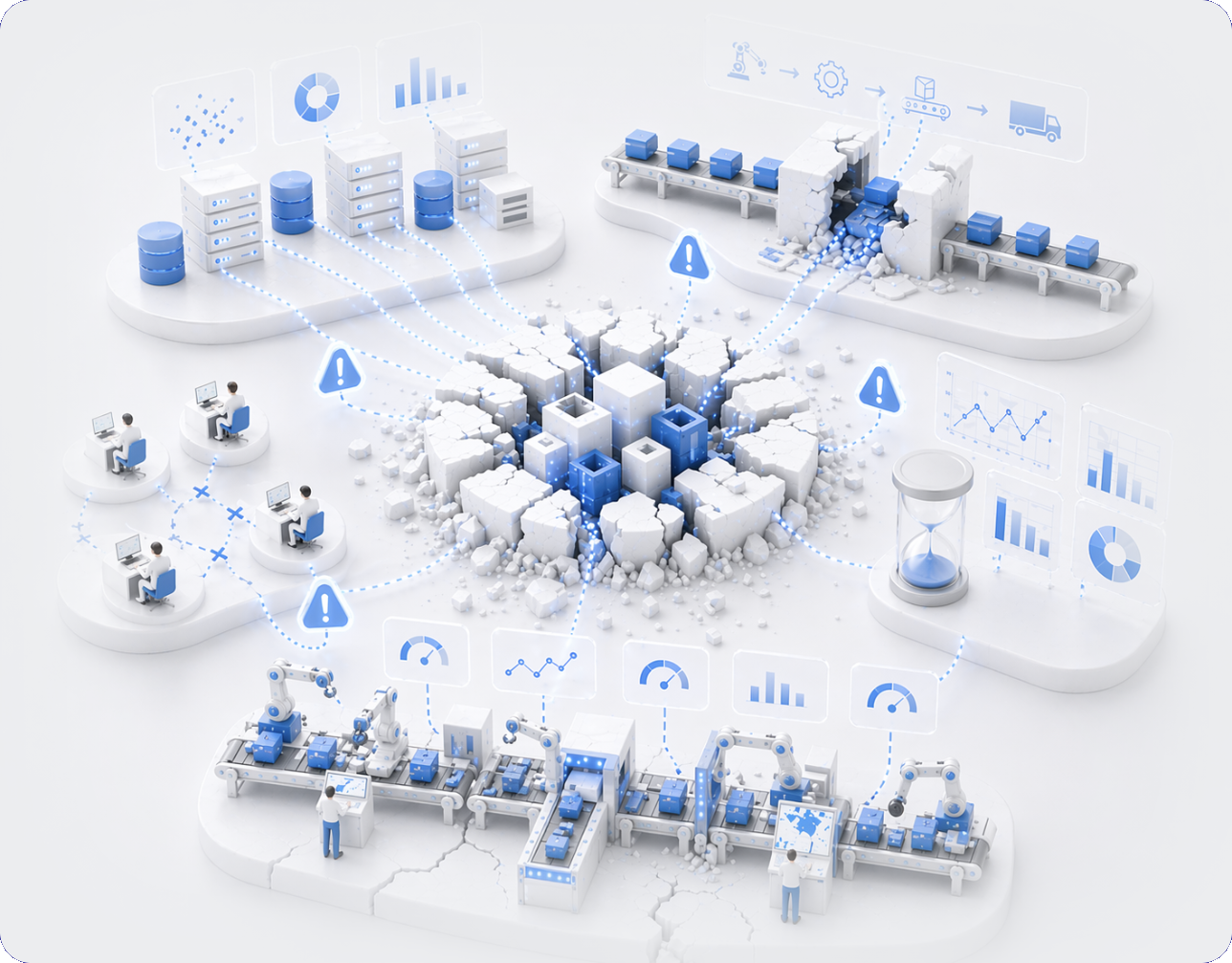
Operational inefficiencies are often hidden within complex processes and siloed systems.
When throughput is constrained, organizations lose capacity without realizing it. Production slows, fulfillment delays increase, and costs rise as teams compensate with overtime, manual intervention, and reactive fixes.
Without visibility into system constraints, companies cannot identify where optimization will have the greatest impact.
The cost is not just inefficiency—it is lost capacity, higher costs, and unrealized operational potential.
What's Breaking Beneath the Surface
-
 Operational data is fragmented across systems with no unified model
 -
 Bottlenecks are not systematically identified or measured
 -
 No consistent framework for tracking throughput, capacity, and constraints
 -
 Decision-making relies on lagging reports instead of real-time signals
 - Processes are optimized locally rather than at the system level
How BlueYeti Optimizes Flow and Throughput

Map end-to-end workflows to identify system constraints

Unify operational data into a single throughput model
Define KPIs for capacity, utilization, and bottleneck performance
Enable real-time monitoring of constraints and system flow

Implement scenario modeling to optimize throughput
From Bottlenecks to Optimized Flow

Basecamp
Diagnose + Prioritize
Identify system constraints and establish throughput baselines
Data & Systems
- End-to-End Workflow MappingMap processes across production, fulfillment, and logistics
- System & Data AuditAssess ERP, MES, and operational systems for data gaps
- Downtime Source AnalysisIdentify sources of unplanned downtime and reactive fixes
Performance & KPIs
- Bottleneck IdentificationAnalyze lead time variability and service level trendsPinpoint constraints and delays across the full system
- Throughput & Capacity AnalysisAnalyze cycle times, utilization, and capacity performance
- Baseline KPI FrameworkEstablish metrics for throughput, utilization, and efficiency
Governance & Alignment
- Ops-Finance AlignmentEvaluate alignment between operational and financial outcomes
- Decision Process ReviewAssess how teams prioritize and respond to constraints

Expedition
Design + Implement
Build a unified throughput model with real-time constraint visibility
Data & Systems
- Unified Operations ModelCapture throughput, constraints, and flow in one data model
- Standardized DefinitionsAlign cycle time, throughput, and utilization across systems
- Predictive IntegrationAdd predictive insights for constraint and demand shifts
Performance & KPIs
- Real-Time Bottleneck VisibilityMonitor system performance and constraints live
- Disruption AlertingImplement monitoring for downtime and disruptions
- KPI-to-Margin FrameworkLink throughput performance to cost and margin outcomes
Governance & Alignment
- Cross-Functional Process AlignmentAlign production, planning, and execution workflows
- Capacity Scenario ModelingModel capacity and demand shift impacts on throughput

Summit
Optimize + Scale
Operationalize continuous improvement and scale across facilities
Data & Systems
- Continuous Model RefinementOptimize throughput models using live operational data
- Enterprise ScalingExtend improvements across facilities and processes
Performance & KPIs
- Automated Constraint DetectionOperationalize bottleneck detection and management
- Embedded Scenario PlanningIntegrate scenario analysis into daily decision-making
- Self-Service AnalyticsEnable operations teams with real-time decision tools
Governance & Alignment
- Performance GovernanceInstitutionalize governance for metrics and accountability
- Internal Capability BuildingTrain teams to manage and evolve optimization systems
From Operational Efficiency to Measurable Value Realization
Disconnected processes, limited visibility into performance drivers, and inefficient resource utilization often constrain throughput and increase operating costs. A unified, real-time operational view enables organizations to optimize output, improve asset and labor utilization, and reduce cost inefficiencies across core operations.

Throughput Improvement
+10–25% increase
Increased output driven by improved process flow and bottleneck identification

Capacity Utilization
+15–30% improvement
Better alignment of resources and demand improves asset and labor efficiency

Cost per Unit
10–20% reduction
Reduced waste, inefficiencies, and rework lower overall operating costs
Economic Impact
What This Means Financially
For a $250M–$500M company, these improvements typically translate into:
- $5M–$15M in incremental output and revenue capacity
- $3M–$10M in operating cost savings from efficiency gains
- Improved operational throughput by 10–25% without proportional cost increases
Impact ranges are based on aggregated industry benchmarks and observed outcomes across operational efficiency and throughput optimization initiatives. Actual results vary based on process complexity, operating model, and execution rigor.